Temple Near Chopta
The Chopta region hosts 1+ architecturally and spiritually significant temple, representing Uttarakhand's profound heritage of sacred architecture and religious devotion. These monuments span multiple historical periods and stylistic traditions, maintaining varying degrees of original integrity while continuing to serve religious and cultural functions. Our documentation provides accurate travel distances from Chopta, architectural descriptions, visitor protocols, and cultural context. Whether approaching these sites as sacred spaces for worship, architectural studies, or cultural exploration, proper understanding enhances meaningful engagement. This guide supports respectful visiting practices while providing comprehensive information enabling informed site selection based on accessibility, architectural significance, and personal interest. Each documented templ offers unique insights into Hindu temple architecture, regional artistic traditions, and continuing spiritual practices that connect contemporary Uttarakhand to its ancient heritage.
Temple in Chopta
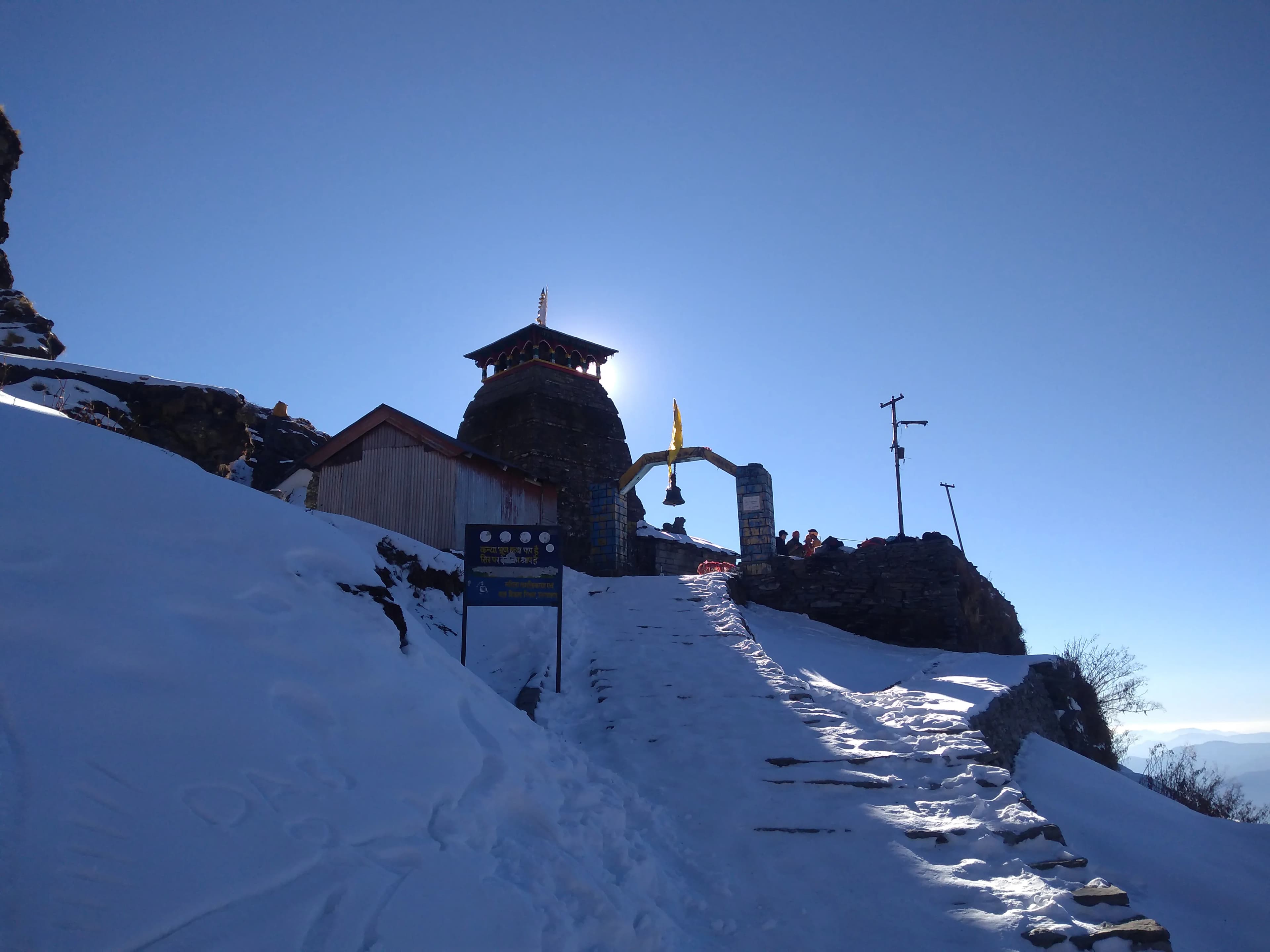
Tungnath Temple Rudraprayag
The biting wind whipped at my shawl as I crested Chandrashila peak, the snow-capped Himalayas stretching out before me like a rumpled white sheet. Below, nestled amongst the undulating brown hills, sat Tungnath, the highest Shiva temple in the world. Having explored countless forts and palaces back in Rajasthan, I was eager to experience this unique high-altitude shrine, a stark contrast to the desert architecture I was accustomed to. The trek down from Chandrashila was steep, the path winding through alpine meadows still dotted with patches of snow despite it being late spring. The air was thin, each breath a conscious effort, but the anticipation of reaching Tungnath spurred me onward. The temple finally came into full view, a small, unassuming stone structure, dwarfed by the majestic peaks surrounding it. Its simplicity was striking, a far cry from the ornate carvings and sprawling complexes of Rajasthan's temples. Built of grey stone, the temple’s architecture reflects the North Indian style, a compact square structure with a sloping roof. Unlike the sandstone and marble I was used to, the stone here felt ancient, weathered smooth by centuries of harsh weather. The small wooden door, studded with iron, seemed almost too modest for a deity of Shiva's stature. Entering, I found myself in a dimly lit sanctum. The air was thick with the scent of incense and the murmur of prayers. The small Shiva lingam, the object of worship, resided at the center, worn smooth by the touch of countless devotees. The walls, though plain, bore witness to the passage of time, with faint traces of what might have once been intricate carvings, now lost to the elements. The priest, bundled in layers of wool, performed the rituals with a practiced ease, his voice resonating in the small space. The handful of other pilgrims present, their faces flushed from the climb, radiated a quiet devotion. There was a palpable sense of peace here, a serenity that transcended the physical hardships of the journey. Stepping back outside, I circumambulated the temple, the wind now a constant companion. The panoramic views from this vantage point were breathtaking. The snow-capped peaks of Nanda Devi, Trishul, and Kedarnath pierced the azure sky, their icy slopes gleaming in the afternoon sun. It was easy to understand why this remote location was chosen as a place of worship. The raw, untamed beauty of the Himalayas felt profoundly spiritual, a fitting backdrop for a temple dedicated to the god of destruction and creation. The architecture of Tungnath, while simple, is remarkably resilient. The interlocking stones, held together without mortar, have withstood centuries of harsh weather, a testament to the ingenuity of the builders. The small size of the temple, perhaps dictated by the challenging terrain, adds to its charm, creating an intimate space for worship. It stands in stark contrast to the grand temples of Rajasthan, a reminder that spirituality isn't confined to elaborate structures but can be found in the most austere of settings. As I began my descent, I couldn't help but feel a sense of awe. Tungnath is more than just a temple; it's an experience. The arduous trek, the breathtaking views, the simple yet powerful architecture, and the palpable sense of devotion combine to create something truly unique. It's a place where the earth meets the sky, where the physical and the spiritual converge, leaving an indelible mark on the soul of every visitor. It reminded me that while the architectural expressions of faith may differ across India, the underlying devotion remains the same, a powerful force that draws people to these sacred spaces, be it a desert fort or a Himalayan peak.
Chopta
Uttarakhand
India
1
Temple
Discover 1 documented heritage sites within Chopta, Uttarakhand. From ancient temples to historic forts, explore cultural treasures near you with complete visitor information, GPS coordinates, timings, and directions.
- 1
Browse Sites on Map
View all 1 heritage sites with up-to-date GPS coordinates and filters for style, era, and accessibility.
- 2
Check Visitor Essentials
Confirm entry requirements, timings, photography rules, and accessibility notes before you travel.
- 3
Plan Efficient Routes
Group nearby monuments into half-day or full-day trails using local transport or hired vehicles.
- 4
Document & Share
Capture respectful visuals, collect local stories, and contribute updates to strengthen the archive.
| Location | Chopta, Uttarakhand |
| Sites Available | 1 documented |
| Transport | Metro · Bus · Auto · Taxi · Private |
| Best Season | October – March |
| Visit Duration | 2–3 hrs per site |
| Navigation Tips | Download offline maps, respect local signage |
Quick Facts
Common Questions
About Chopta Heritage Region
Chopta occupies a heritage-rich region of Uttarakhand, reflecting historical importance rooted in geographical advantages, pilgrimage networks, and royal patronage traditions. The concentration of temple throughout this region developed through centuries of religious devotion, political power, and cultural achievement. Sites range from locations within Chopta proper to monuments situated 30-90 minutes distant, enabling both brief visits and comprehensive day-long explorations. Accessible sites facilitate morning visits returning by afternoon, while more distant monuments reward full-day excursions potentially combining multiple sites along geographical routes. Transportation infrastructure throughout Chopta includes app-based ride services, traditional auto-rickshaws, and taxi services. Multiple-site visits often benefit from private vehicle hire enabling flexible scheduling and optimal route planning. Visiting patterns vary seasonally and weekly; weekday mornings typically offer peaceful experiences, while festival periods provide opportunities to witness continuing traditions, though with increased visitor density. This collection documents prominent sites alongside lesser-known monuments, enabling balanced itineraries combining well-documented heritage with discoveries off typical tourist circuits.
Getting Around from Chopta
Transportation from Chopta to regional heritage sites employs various modalities depending on distance and infrastructure. India offers well-developed transportation including auto-rickshaw, Indian Railways, state buses. Sites within Chopta limits remain accessible via local transport options. Outlying monuments may require private vehicle access: rental cars for independent travelers, or hired vehicles with experienced drivers. Organized tours offer structured itineraries with less scheduling flexibility. Distance ranges span 5-80 kilometers from Chopta; proximate sites (5-15km) involve 30-45 minute journeys, while more distant monuments (40-80km) require 1.5-2.5 hours depending on traffic conditions and road quality. Site-specific documentation provides exact coordinates, suggested routes, and access considerations. Local knowledge complements digital navigation; consulting residents regarding road conditions and optimal routes proves valuable.
When to Visit
Seasonal considerations significantly affect heritage site visiting experiences throughout Uttarakhand. The optimal visiting period for India extends October through March, offering comfortable weather conditions and extended visiting hours, though popular sites may experience higher visitor density. Most temple remain accessible year-round, though specific closures or modified hours warrant verification before visiting. Weather patterns vary by region within India, so consulting local forecasts ensures appropriate planning. Festival periods at active worship sites provide enriching cultural experiences, though with substantially increased attendance meriting advance planning. Entry fees at protected monuments typically range from ₹25-₹40. Photography for personal use is generally permitted, though professional equipment may require advance permissions.