Tamil Nadu
Monument
1 sites
📍 10.1746°N, 78.7794°E
Monument Near Kanadukathan
The Kanadukathan region hosts 1+ architecturally and spiritually significant monument, representing Tamil Nadu's profound heritage of sacred architecture and religious devotion. These monuments span multiple historical periods and stylistic traditions, maintaining varying degrees of original integrity while continuing to serve religious and cultural functions. Our documentation provides accurate travel distances from Kanadukathan, architectural descriptions, visitor protocols, and cultural context. Whether approaching these sites as sacred spaces for worship, architectural studies, or cultural exploration, proper understanding enhances meaningful engagement. This guide supports respectful visiting practices while providing comprehensive information enabling informed site selection based on accessibility, architectural significance, and personal interest. Each documented monumen offers unique insights into Hindu temple architecture, regional artistic traditions, and continuing spiritual practices that connect contemporary Tamil Nadu to its ancient heritage.
Discover 1+ monument near Kanadukathan with complete documentation enabling informed site selection and respectful, enriching visits to Tamil Nadu's sacred and historical monuments.
Monument in Kanadukathan
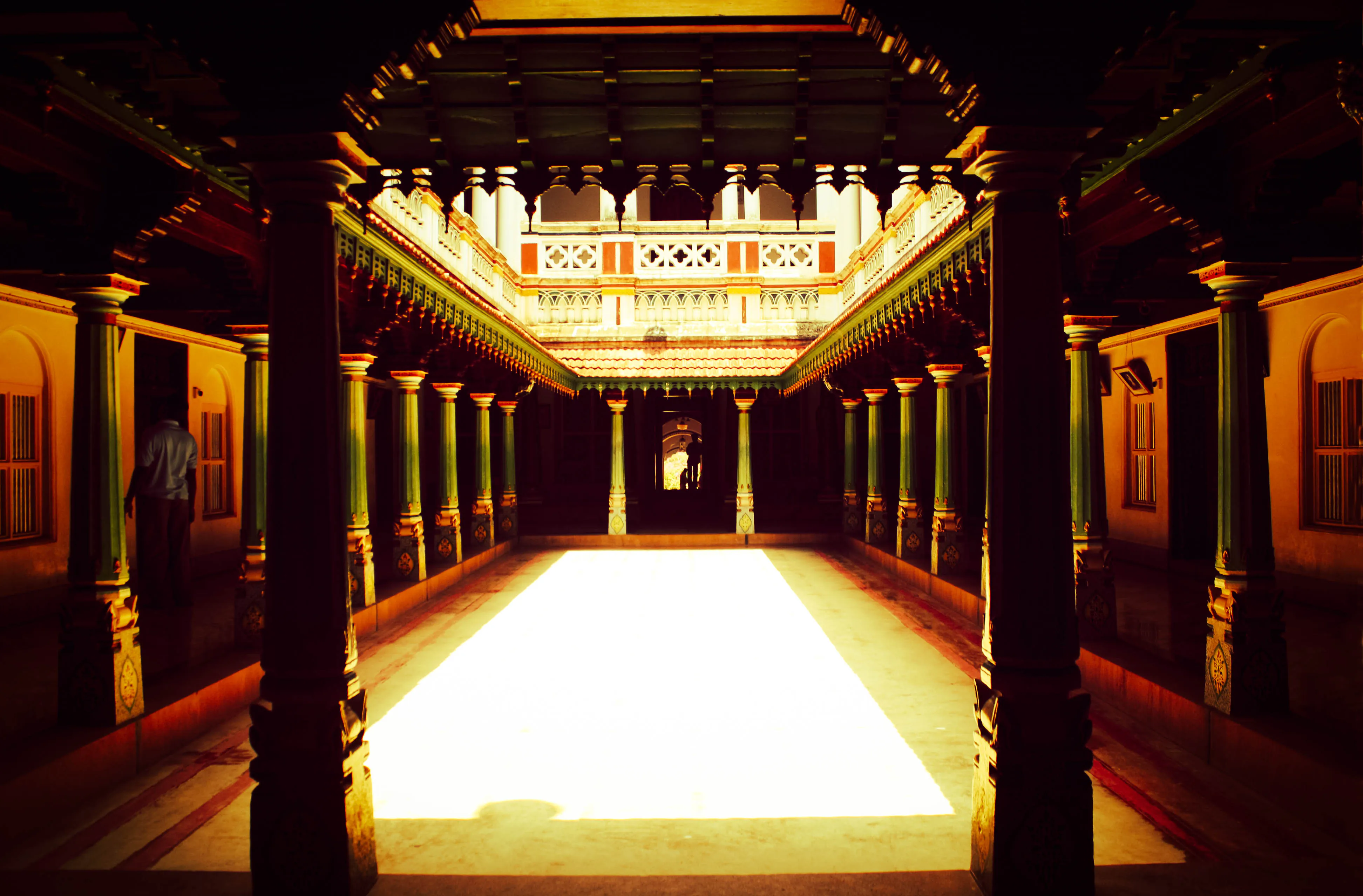
Chettinad Palace Karaikudi
Kanadukathan (630103), Tamil Nadu, India
The ochre walls of Chettinad Palace in Karaikudi, constructed in 1912 CE, embody a unique fusion of Tamil and European architectural styles, reflecting the Chettiar community's global engagements ([1][2]). Spanning 60,000 square feet, this edifice reveals the opulence of its patrons ([1]). Athangudi tiles, meticulously handcrafted from local clay and natural dyes, adorn the expansive courtyard with intricate geometric patterns ([3]). Intricate carvings embellishing the pillars depict mythological figures and floral motifs, showcasing the skills of local artisans ([3]). Burma teak pillars and Italian marble flooring grace the two-story structure, exemplifying the Chettiars' affinity for incorporating foreign elements into their architectural designs ([2]). High ceilings, enhanced by Belgian chandeliers, evoke a sense of grandeur ([4]). Walls painted in vibrant hues complement Tanjore paintings portraying Hindu mythological scenes ([4]). Within the Garbhagriha (Sanctum), antique European pieces harmonize with locally crafted wooden furniture inlaid with mother-of-pearl ([5]). Vastu Shastra principles, the ancient Indian science of architecture, are subtly interwoven with the colonial influences, creating a unique aesthetic. Wide corridors facilitate air circulation, a practical feature that adds to the palace's grandeur ([1]). Granite and sandstone blocks, meticulously carved, along with locally sourced black granite and Athangudi tiles, underscore the Chettiars' deep connection to their land ([3]). This architectural marvel blends tradition with modernity, embodying the Chettiars' entrepreneurial spirit and artistic sensibilities ([2][5]). The palace stands as a testament to the Chettiar community's cultural heritage and their ability to synthesize diverse influences into a cohesive and magnificent whole.
Specialized Data:
City
Kanadukathan
State
Tamil Nadu
Country
India
Total Sites
1
Category
Monument
What is Heritage Sites Near Kanadukathan, Tamil Nadu?
Discover 1 documented heritage sites within Kanadukathan, Tamil Nadu. From ancient temples to historic forts, explore cultural treasures near you with complete visitor information, GPS coordinates, timings, and directions.
City:
KanadukathanState:
Tamil NaduCountry:
IndiaTotal Sites:
1Category:
MonumentCoordinates:
10.1746°N, 78.7794°EHow to Explore Heritage Sites in Kanadukathan
- 1
Browse Sites on Map
View all 1 heritage sites with up-to-date GPS coordinates and filters for style, era, and accessibility.
- 2
Check Visitor Essentials
Confirm entry requirements, timings, photography rules, and accessibility notes before you travel.
- 3
Plan Efficient Routes
Group nearby monuments into half-day or full-day trails using local transport or hired vehicles.
- 4
Document & Share
Capture respectful visuals, collect local stories, and contribute updates to strengthen the archive.
Planning Snapshot
| Location | Kanadukathan, Tamil Nadu |
| Sites Available | 1 documented |
| Transport | Metro · Bus · Auto · Taxi · Private |
| Best Season | October – March |
| Visit Duration | 2–3 hrs per site |
| Navigation Tips | Download offline maps, respect local signage |
Quick Facts
•1 monument within reach of Kanadukathan
•Located in Tamil Nadu, a state/region rich in cultural heritage
•Average travel time: 30-90 minutes from Kanadukathan city center
•Best visiting season: October through March
•Entry fees typically range ₹25-₹40 at protected sites
•Transportation options include auto-rickshaw, Indian Railways, state buses
•GPS coordinates provided for all sites for accurate navigation
•Local guides available at major heritage sites
•Photography permitted at most sites (tripod restrictions may apply)
•Kanadukathan serves as convenient base with hotels and restaurants
Common Questions
About Kanadukathan Heritage Region
Kanadukathan occupies a heritage-rich region of Tamil Nadu, reflecting historical importance rooted in geographical advantages, pilgrimage networks, and royal patronage traditions. The concentration of monument throughout this region developed through centuries of religious devotion, political power, and cultural achievement. Sites range from locations within Kanadukathan proper to monuments situated 30-90 minutes distant, enabling both brief visits and comprehensive day-long explorations. Accessible sites facilitate morning visits returning by afternoon, while more distant monuments reward full-day excursions potentially combining multiple sites along geographical routes. Transportation infrastructure throughout Kanadukathan includes app-based ride services, traditional auto-rickshaws, and taxi services. Multiple-site visits often benefit from private vehicle hire enabling flexible scheduling and optimal route planning. Visiting patterns vary seasonally and weekly; weekday mornings typically offer peaceful experiences, while festival periods provide opportunities to witness continuing traditions, though with increased visitor density. This collection documents prominent sites alongside lesser-known monuments, enabling balanced itineraries combining well-documented heritage with discoveries off typical tourist circuits.
Getting Around from Kanadukathan
Transportation from Kanadukathan to regional heritage sites employs various modalities depending on distance and infrastructure. India offers well-developed transportation including auto-rickshaw, Indian Railways, state buses. Sites within Kanadukathan limits remain accessible via local transport options. Outlying monuments may require private vehicle access: rental cars for independent travelers, or hired vehicles with experienced drivers. Organized tours offer structured itineraries with less scheduling flexibility. Distance ranges span 5-80 kilometers from Kanadukathan; proximate sites (5-15km) involve 30-45 minute journeys, while more distant monuments (40-80km) require 1.5-2.5 hours depending on traffic conditions and road quality. Site-specific documentation provides exact coordinates, suggested routes, and access considerations. Local knowledge complements digital navigation; consulting residents regarding road conditions and optimal routes proves valuable.
When to Visit
Seasonal considerations significantly affect heritage site visiting experiences throughout Tamil Nadu. The optimal visiting period for India extends October through March, offering comfortable weather conditions and extended visiting hours, though popular sites may experience higher visitor density. Most monument remain accessible year-round, though specific closures or modified hours warrant verification before visiting. Weather patterns vary by region within India, so consulting local forecasts ensures appropriate planning. Festival periods at active worship sites provide enriching cultural experiences, though with substantially increased attendance meriting advance planning. Entry fees at protected monuments typically range from ₹25-₹40. Photography for personal use is generally permitted, though professional equipment may require advance permissions.