Heritage Sites Near Bengaluru
Bengaluru serves as an ideal base for exploring 3+ heritage monuments throughout Karnataka, offering opportunities for day excursions and weekend heritage tourism. This documented collection includes ancient temples maintaining unbroken worship traditions, historic fortifications witnessing regional political history, and architectural monuments demonstrating artistic excellence across multiple periods. Proximity ranges enable flexible planning: sites within Bengaluru limits facilitate brief morning or afternoon visits, while outlying monuments within 60-90 kilometer radius reward full-day expeditions. Geographic organization by distance from Bengaluru supports realistic itinerary planning. Documentation provides current visitor information, entry requirements, transportation recommendations, and seasonal accessibility considerations. Whether seeking spiritual connection at sacred sites, architectural appreciation, or historical understanding, this collection supports meaningful engagement with Karnataka's diverse heritage representing centuries of civilizational achievement accessible from Bengaluru.
All Heritage Sites in Bengaluru
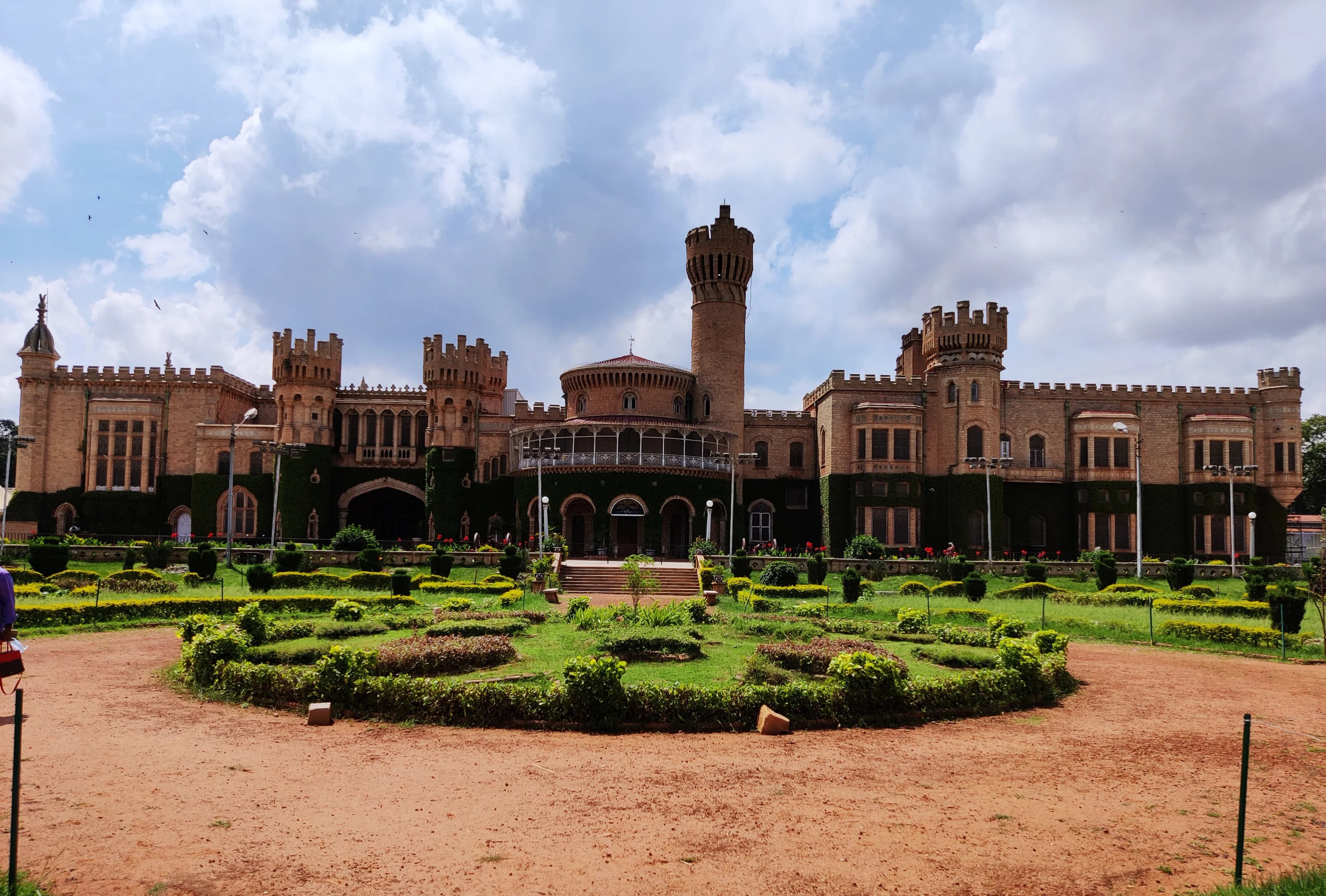
Bangalore Palace Bangalore
Envisioned by Chamarajendra Wadiyar X of the Mysore Royal Family, the Bangalore Palace, completed in 1873 CE, presents a Tudor Revival architectural style in the heart of Bengaluru ([1][2]). The palace echoes Windsor Castle's design, manifesting British Colonial influences on Indian princely architecture ([1][3]). Granite, wood, mortar, and steel constitute the primary materials employed in its construction, reflecting the era's engineering ([2]). Intricate carvings embellish the Durbar Hall, complemented by stained-glass windows illustrating scenes from Indian mythology and ornate chandeliers ([3][4]). These decorative elements, while European in style, served to enhance the grandeur of royal ceremonies and cultural events patronized by the Wodeyar dynasty ([1][2]). Sepia-toned photographs lining the palace walls offer glimpses into the lives and legacy of the Wodeyar rulers, preserving a visual record of their reign ([4]). Stone platforms and foundations exhibit a fusion of Victorian and Edwardian styles, evident in the arched corridors and wooden columns ([5]). Floral motifs and depictions of mythical creatures reflect the artisans' skill in blending Western architectural forms with traditional Indian aesthetics ([5]). Though the palace's design leans heavily on Western palatial architecture, its role as a center for royal patronage and cultural events firmly roots it in Indian heritage ([1][2]). The Mysore Royal Family used this palace for important functions, adapting it to local customs ([1][3]). While not directly linked to ancient Indian architectural treatises like the *Manasara Shilpa Shastra* or *Mayamata*, the Bangalore Palace represents a unique adaptation of Western architectural styles to suit the needs and tastes of an Indian royal family ([3]). It stands as a testament to the dynamic interaction between Indian and European cultures during the British Colonial period, preserving a vital piece of India's princely history ([1][2]).
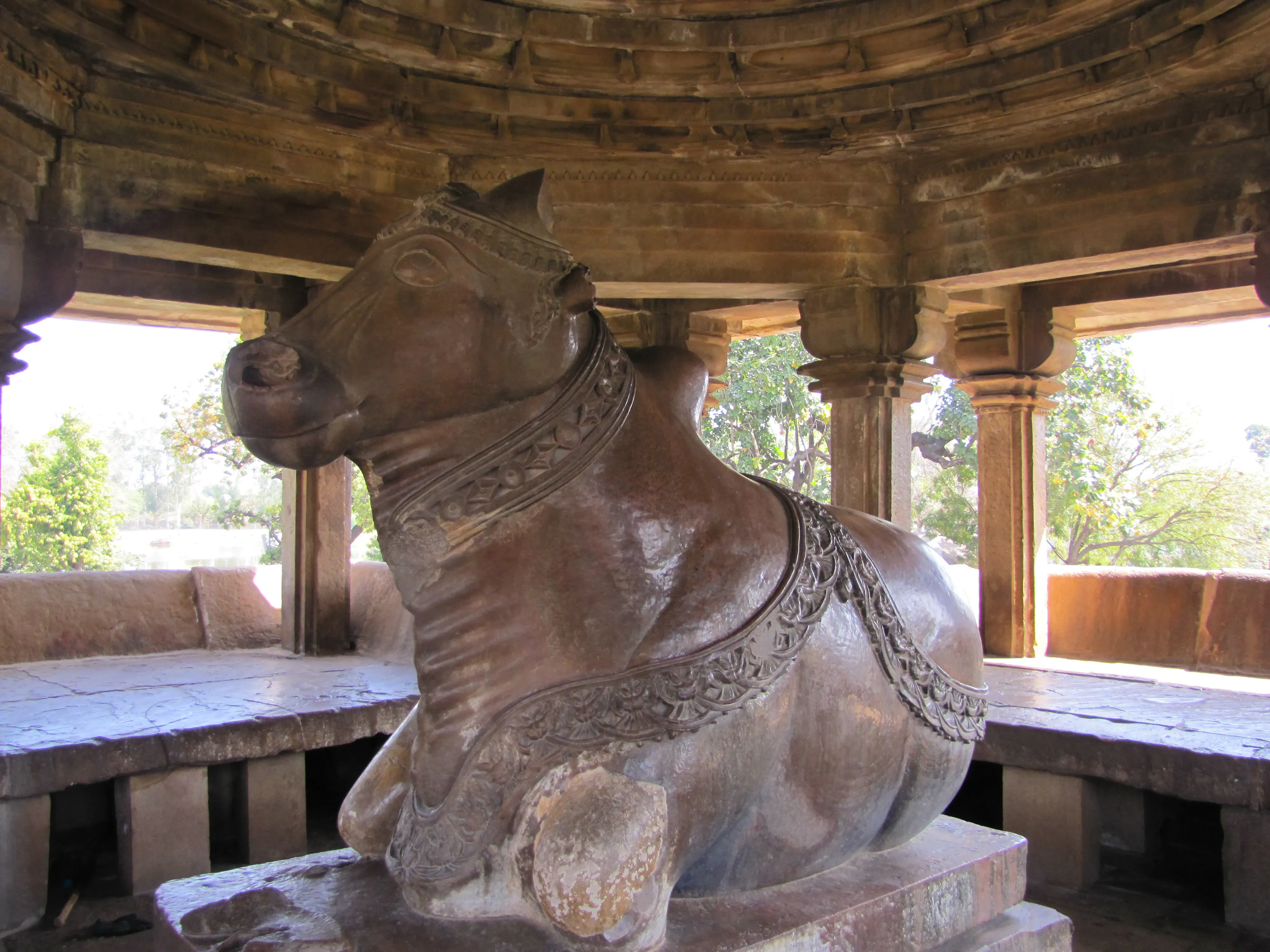
Bull Temple (Dodda Basavana Gudi) Bengaluru
Dominating the landscape of Bengaluru's Basavanagudi, the Dodda Basavana Gudi, more popularly known as the Bull Temple, houses a massive Nandi (sacred bull) idol ([1]). Commissioned by Kempe Gowda I, a chieftain of the Vijayanagara empire, in 1537 CE, this temple exemplifies Dravidian architectural principles ([2][3]). The temple's construction, marked by granite carvings, stands as a testament to the 16th-century Vijayanagara artistry ([4]). Stone platforms and foundations provide a stable base for the temple structure, ensuring its longevity. The monolithic Nandi, carved from a single granite boulder, is a remarkable sight, measuring 4.5 meters in height and 6.5 meters in length ([1][2]). Emphasizing simplicity and monumentality, the Nandi sculpture is often adorned with garlands, reflecting the devotion of its worshippers ([5]). During the Vijayanagara period, temple architecture flourished, characterized by towering Gopurams (pyramidal towers) and intricate carvings ([3]). The open courtyard, a typical feature of Dravidian temple design, integrates the temple with its natural surroundings. Legend narrates that the Nandi idol was initially smaller but grew in size, linked to a tale where devotees sought to appease a bull damaging groundnut crops ([5]). This narrative underscores the temple's deep connection to the local community and its agricultural practices. Within the Garbhagriha (Sanctum), the Nandi embodies the unifying power of faith, subtly bridging stylistic elements of both North and South Indian temple traditions ([4]). The use of granite, mortar, soapstone, and plaster highlights the regional materials employed in its construction. This temple remains a vibrant center for religious practice and a significant landmark in Bengaluru's cultural heritage.
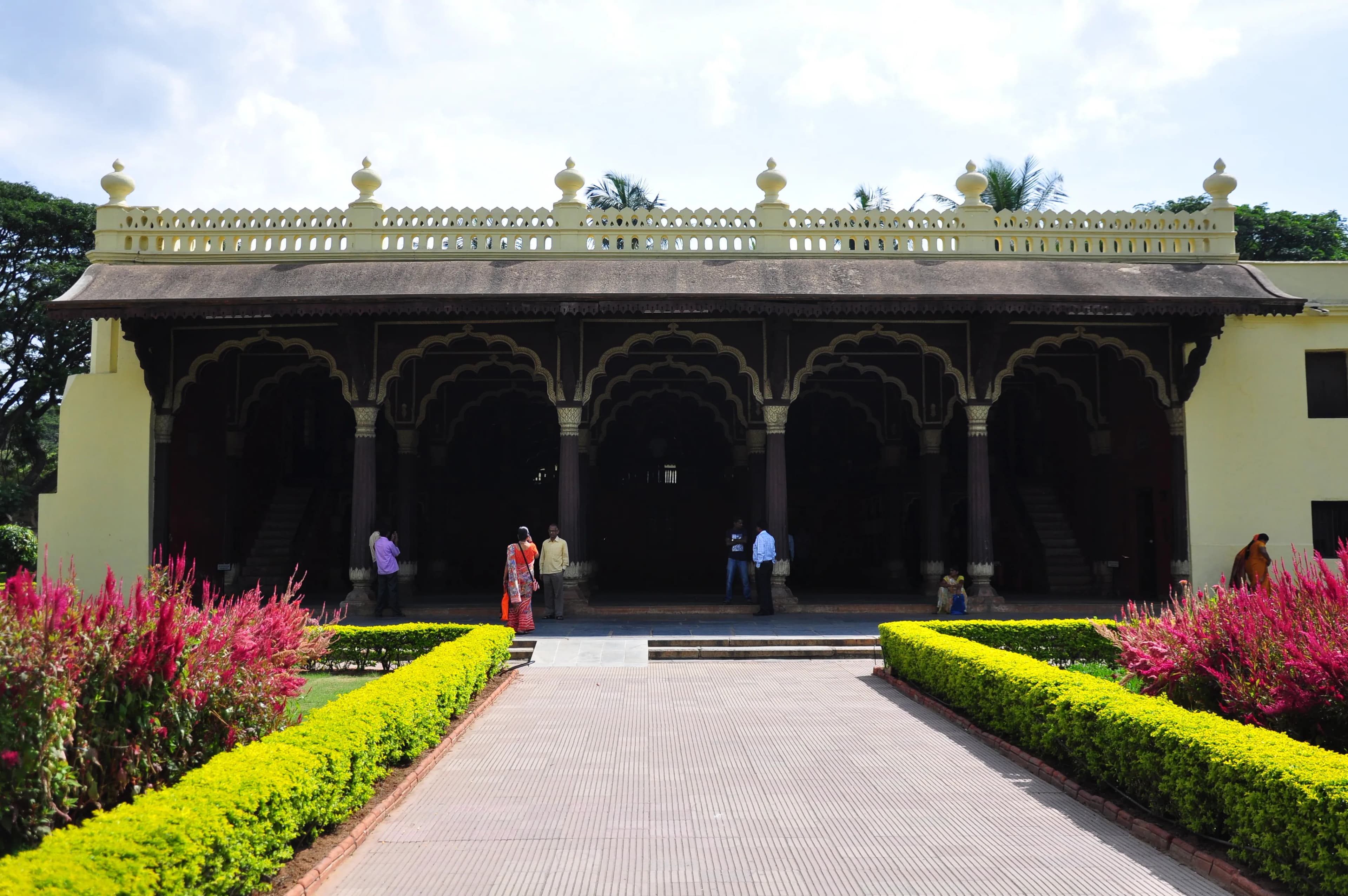
Tipu Sultan's Summer Palace Bengaluru
The scent of sandalwood hung faintly in the air, a subtle reminder of the palace's regal past, as I stepped into Tipu Sultan's Summer Palace in Bangalore. This two-storied Indo-Islamic structure, also known as the Dariya Daulat Bagh (Garden of the Sea of Wealth), stands as a testament to a turbulent yet fascinating period in South Indian history. Having spent years studying the grandeur of Dravidian temple architecture in my hometown of Chennai, I was eager to experience this distinct architectural style. The palace, constructed primarily of teakwood, rests atop a raised stone plinth. Unlike the towering gopurams and intricate stone carvings that characterize temples back home, the Summer Palace exudes a sense of airy lightness. The intricately carved pillars, delicate floral motifs, and vibrant paintwork create an atmosphere of refined elegance rather than imposing majesty. The four fluted pillars at each corner of the first floor, supporting the extended roof, reminded me of similar structures I'd observed in Chettinad mansions, albeit on a smaller scale. As I ascended the wooden staircase to the upper floor, the creaking sounds underfoot seemed to echo whispers of the past. The upper floor, an open-air durbar hall, offered panoramic views of the surrounding gardens. I could almost envision Tipu Sultan holding court here, surrounded by his advisors. The walls of the durbar hall are adorned with vibrant frescoes depicting scenes of battles, processions, and courtly life. These frescoes, though faded with time, offer a glimpse into the socio-political landscape of the late 18th century. The distinct European influence in some of the depictions, particularly in the portrayal of soldiers and weaponry, speaks to the complex interactions between the Mysore Kingdom and European powers. One aspect that particularly captivated me was the extensive use of floral motifs in the decoration. While floral patterns are common in South Indian art, the style here differed significantly from the bold lotus and creeper designs I was accustomed to seeing in temple architecture. The delicate floral patterns at the Summer Palace, often interspersed with geometric designs, seemed to draw inspiration from Persian and Islamic art, showcasing a beautiful fusion of styles. This syncretism extended to the architectural elements as well, with arches and domes coexisting harmoniously with traditional South Indian wooden construction techniques. Walking around the perimeter of the upper floor, I noticed the thin, almost translucent, sheets of mother-of-pearl inlaid into the wooden framework. This delicate ornamentation, catching the light and shimmering subtly, added a touch of opulence to the otherwise simple structure. It served as a reminder of the wealth and sophistication of Tipu Sultan's court. The surrounding gardens, though not as extensive as they once were, still provide a tranquil setting for the palace. The remnants of the original water channels and fountains hinted at the elaborate landscaping that must have existed during Tipu Sultan's time. I imagined the gardens filled with fragrant flowers and the sound of flowing water, creating a cool oasis in the Bangalore heat. My visit to Tipu Sultan's Summer Palace was more than just a sightseeing trip; it was a journey through time, a glimpse into a period of significant historical and cultural exchange. While the palace lacks the monumental scale and intricate stonework of the grand temples I'm familiar with, its delicate beauty, vibrant frescoes, and unique blend of architectural styles offer a compelling narrative of its own. It stands as a powerful reminder that architectural heritage isn't just about grand structures; it's about the stories they tell, the cultures they represent, and the connections they forge across time.
Bengaluru
Karnataka
India
3
All Heritage Sites
Discover 3 documented heritage sites within Bengaluru, Karnataka. From ancient temples to historic forts, explore cultural treasures near you with complete visitor information, GPS coordinates, timings, and directions.
- 1
Browse Sites on Map
View all 3 heritage sites with up-to-date GPS coordinates and filters for style, era, and accessibility.
- 2
Check Visitor Essentials
Confirm entry requirements, timings, photography rules, and accessibility notes before you travel.
- 3
Plan Efficient Routes
Group nearby monuments into half-day or full-day trails using local transport or hired vehicles.
- 4
Document & Share
Capture respectful visuals, collect local stories, and contribute updates to strengthen the archive.
| Location | Bengaluru, Karnataka |
| Sites Available | 3 documented |
| Transport | Metro · Bus · Auto · Taxi · Private |
| Best Season | October – March |
| Visit Duration | 2–3 hrs per site |
| Navigation Tips | Download offline maps, respect local signage |
Quick Facts
Common Questions
About Bengaluru Heritage Region
Bengaluru occupies a heritage-rich region of Karnataka, reflecting historical importance rooted in geographical advantages, pilgrimage networks, and royal patronage traditions. The architectural diversity documented here spans centuries of religious devotion, political power, and cultural achievement. Sites range from locations within Bengaluru proper to monuments situated 30-90 minutes distant, enabling both brief visits and comprehensive day-long explorations. Accessible sites facilitate morning visits returning by afternoon, while more distant monuments reward full-day excursions potentially combining multiple sites along geographical routes. Transportation infrastructure throughout Bengaluru includes app-based ride services, traditional auto-rickshaws, and taxi services. Multiple-site visits often benefit from private vehicle hire enabling flexible scheduling and optimal route planning. Visiting patterns vary seasonally and weekly; weekday mornings typically offer peaceful experiences, while festival periods provide opportunities to witness continuing traditions, though with increased visitor density. This collection documents prominent sites alongside lesser-known monuments, enabling balanced itineraries combining well-documented heritage with discoveries off typical tourist circuits.
Getting Around from Bengaluru
Transportation from Bengaluru to regional heritage sites employs various modalities depending on distance and infrastructure. India offers well-developed transportation including auto-rickshaw, Indian Railways, state buses. Sites within Bengaluru limits remain accessible via local transport options. Outlying monuments may require private vehicle access: rental cars for independent travelers, or hired vehicles with experienced drivers. Organized tours offer structured itineraries with less scheduling flexibility. Distance ranges span 5-80 kilometers from Bengaluru; proximate sites (5-15km) involve 30-45 minute journeys, while more distant monuments (40-80km) require 1.5-2.5 hours depending on traffic conditions and road quality. Site-specific documentation provides exact coordinates, suggested routes, and access considerations. Local knowledge complements digital navigation; consulting residents regarding road conditions and optimal routes proves valuable.
When to Visit
Seasonal considerations significantly affect heritage site visiting experiences throughout Karnataka. The optimal visiting period for India extends October through March, offering comfortable weather conditions and extended visiting hours, though popular sites may experience higher visitor density. Heritage sites maintain varying seasonal schedules; specific closures or modified hours warrant verification before visiting. Weather patterns vary by region within India, so consulting local forecasts ensures appropriate planning. Festival periods at active worship sites provide enriching cultural experiences, though with substantially increased attendance meriting advance planning. Entry fees at protected monuments typically range from ₹25-₹40. Photography for personal use is generally permitted, though professional equipment may require advance permissions.